Web Development
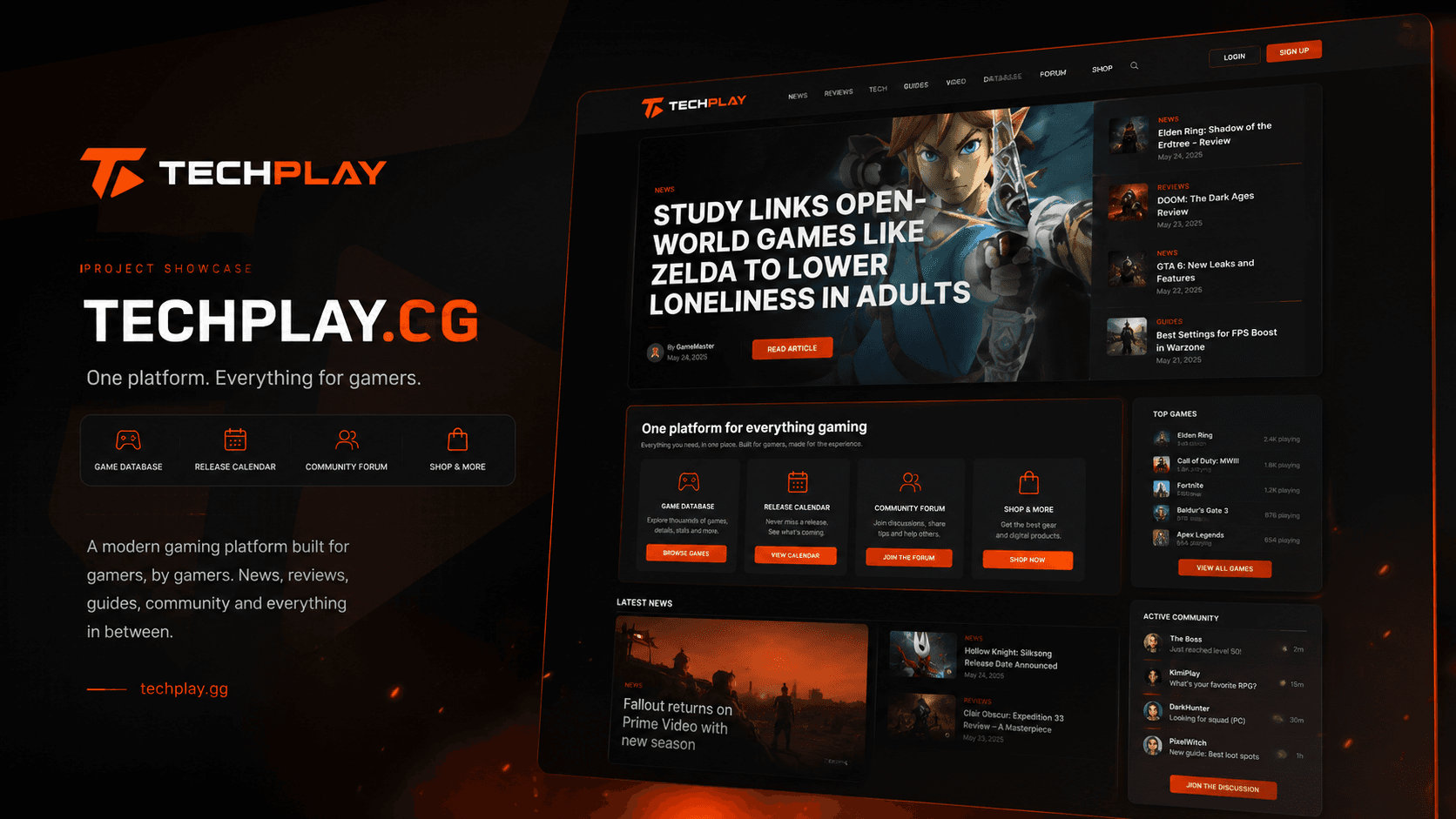
Company websites, online shops and web applications, built in Next.js. TechPlay’s database of more than 200,000 games runs on the same stack.
We build web applications for companies whose work has outgrown spreadsheets, email threads and off-the-shelf tools: client portals, dashboards, booking and ordering systems, and internal tools with logins, roles and data.
We build and run our own software the same way: the client portal our hosting customers log in to is an application we wrote and maintain. Your project gets that setup from the first version — authentication, permissions, audit trails and tested backups.
A place where clients log in to see orders, documents, invoices and status, instead of asking for them by email.
Case study: Media MonitoringNumbers from your systems in one view, updated automatically, with access by role.
Availability, reservations, orders and payments handled online, with confirmations and reminders sent automatically.
Case study: Day GalleryAdmin panels and workflows that replace spreadsheets: approvals, inventories and task lists, with a record of who changed what.
Case study: Maloljetni dobrovoljciConnections to accounting, CRM, payment and shipping systems, so data is entered once and reaches every place it is needed.
A first version scoped to what proves the idea, built on a codebase that can grow into the full product.
What you receiveA written scope with screens, roles, integrations and a fixed price.
What you receiveA prototype your team has used, with flows agreed.
What you receiveA staging app you use with real data as it grows.
What you receiveA live app, migrated data and trained users.
What you receiveA maintained app and a written plan for what comes next.
200K+
games, each with a page of its own
Behind TechPlay is a back office we built for its editors: news, reviews, a 200,000-title database and a release calendar, all managed without touching code.
View case studyWe choose tools based on the requirements of the project, your existing systems and what will be practical to maintain after delivery. Below are the technologies we typically use for this type of work, and why.
One codebase for the interface and the server logic, with pages that load fast and work well on a phone.
Applications live for years; types keep changes safe as features and developers are added.
APIs, background jobs, scheduled tasks and integrations with the systems you already use.
Relational data, permissions and reporting in a database that has run serious systems for decades.
The same environment on every server, so deployments are repeatable and a restore takes minutes.
Hosting in EU data centres with daily off-site backups and monitoring, so the data stays in the EU.
Subscriptions, invoices and card payments when the application charges its users.
Repository, database, hosting and domain registered to your business from day one.
Every action checked against the user's role, with a log of sensitive changes.
How the app is built, deployed and restored, written for whoever maintains it next.
Daily off-site backups that are restored in tests, and uptime monitoring from day one.
If you cannot find the answer below, send us your question. A member of our team will reply within one business day.
Ask a questionA focused first version usually takes 6–12 weeks, depending on roles, integrations and the number of screens. Larger products are delivered in stages, each with its own written scope.
A custom web application starts from €4,500. The final price depends on screens, roles and integrations and is quoted in writing for each stage; once agreed, it does not change.
You do. The code, database, hosting and domain are registered to your business from day one, and full ownership transfers on final payment.
If an existing tool covers the process with acceptable workarounds, buying is usually cheaper, and we will tell you so. Custom software makes sense when the process is what sets you apart, when integrations are the hard part, or when per-seat fees outgrow the cost of building.
Secure sessions, roles and permissions checked on every action, encrypted connections, logs of sensitive changes, and daily backups that are restored in tests. Data stays in EU data centres unless you need it elsewhere.
Yes. The first version is scoped to what proves the idea, but the codebase, database and hosting are set up for the full product. New features are scoped and quoted the same way as the first release.
Company websites, online shops and web applications, built in Next.js. TechPlay’s database of more than 200,000 games runs on the same stack.
Assistants and automations for work your staff repeats every day, such as sorting enquiries or copying data from one system to another.
Managed hosting and care for the sites we build, and for sites we take over from someone else.