
Web Development
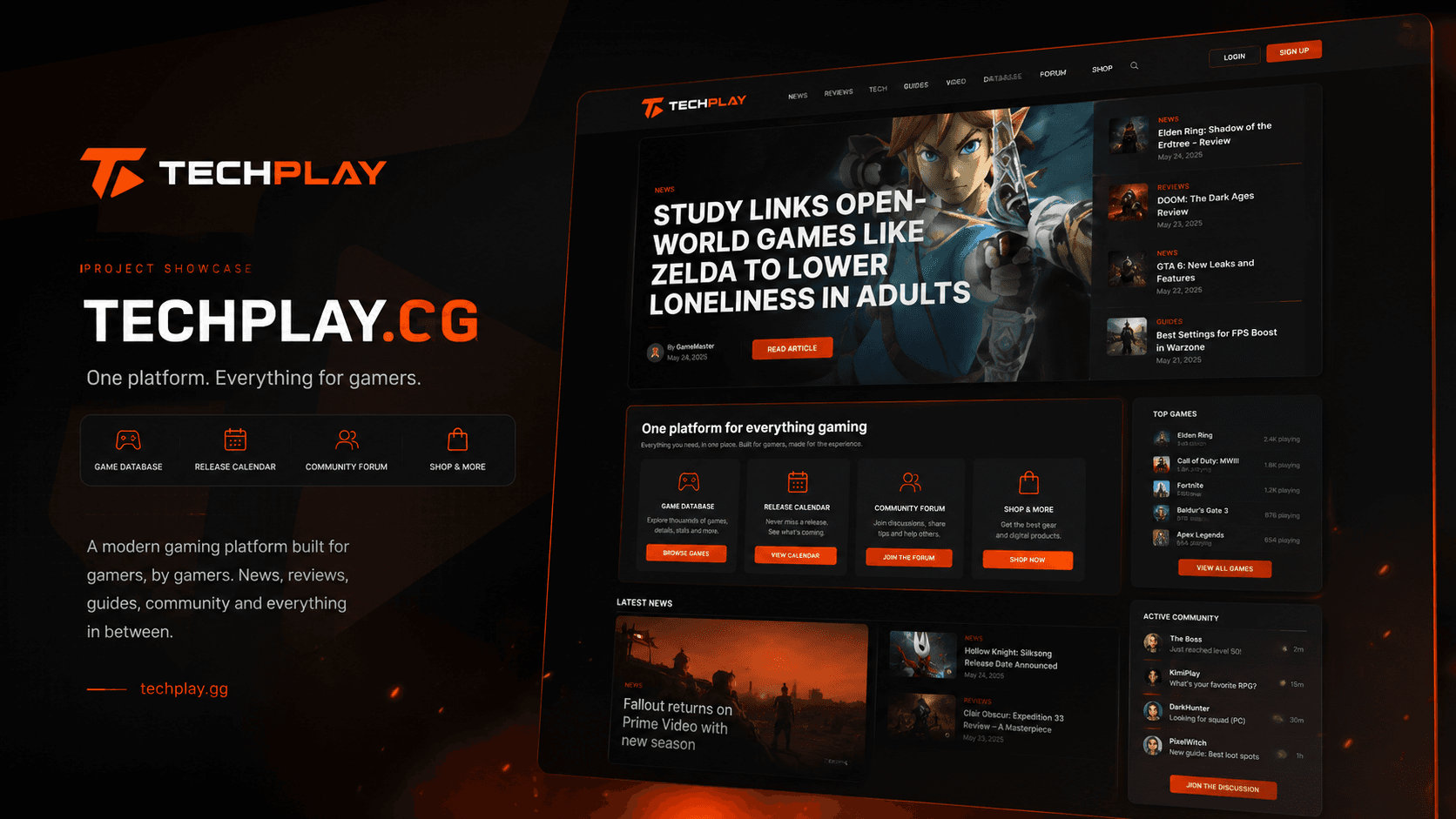
Company websites, online shops and web applications, built in Next.js. TechPlay’s database of more than 200,000 games runs on the same stack.
We build websites and web applications on Next.js and React for companies in the EU and the US. Pages are rendered on the server, so search engines and AI assistants read the full content and visitors see it without waiting for scripts.
Next.js is the framework behind nearly every project we ship, including this site and the platforms in our case studies. You get a setup for content, search and hosting that has already been tested in production, not a first attempt on your budget.
Static generation or server rendering chosen per page type, so every page loads fast and arrives complete for Google, Bing and AI crawlers. Metadata, sitemaps and structured data are generated from the content.
Next.js in front, and behind it the CMS that suits your team: a headless CMS, headless WordPress, or a custom admin like the Laravel + Filament back office behind TechPlay. Editors publish without a deploy.
Headless CMS DevelopmentLogins, roles, dashboards and forms on the App Router, backed by PostgreSQL. One codebase can serve the public site and the area behind the login.
Web Application DevelopmentProduct, category and checkout pages rendered for speed and search, connected to Stripe, Monri, WSPay or the commerce platform you already run.
E-commerce DevelopmentImage and font optimisation, streaming, caching and bundle budgets, measured on a mid-range phone over a mobile network rather than on a developer's laptop.
From WordPress, Gatsby, a client-side React app or an older Next.js version, URL by URL, with redirects mapped and rankings monitored after the switch.
WordPress to Next.jsWhat you receiveA written scope: pages, data, integrations, hosting and a fixed price.
What you receiveA prototype you have tapped through and a rendering plan for every page type.
What you receiveA staging site that updates as the work progresses.
What you receiveA live site with redirects, sitemap and Search Console checked on launch day.
What you receiveA tuned site, documentation and a recorded CMS handover.
200K+
games, each with a page of its own
TechPlay runs on Next.js: a catalogue of 200,000+ games in which every title, review and category is its own server-rendered, indexable page.
View case studyWe choose tools based on the requirements of the project, your existing systems and what will be practical to maintain after delivery. Below are the technologies we typically use for this type of work, and why.
App Router, server components and static generation: each page type gets the rendering that suits it, and the content is in the HTML from the first byte.
Catches whole categories of bugs before the code runs, which keeps a growing codebase cheap to change.
APIs, forms, integrations and background jobs, written in the same language as the front end.
Design tokens enforced in code, so the site still matches its design system years and several developers later.
When a project needs a database: mature, widely supported and able to scale.
Edge hosting for projects that suit it. The code stays portable, so the choice can change later.
Or our own Docker-based hosting in Hetzner's EU data centres, with backups, monitoring and the data staying in the EU.
Repository, hosting, domain and analytics registered to your business from day one.
Pages, text, images and posts editable without a developer, with a recorded walkthrough.
Lighthouse and Core Web Vitals results from real devices, attached to the handover.
Metadata, canonical tags, hreflang, sitemaps and structured data generated from content, not added by plugins.
If you cannot find the answer below, send us your question. A member of our team will reply within one business day.
Ask a questionA marketing site typically takes 3–6 weeks from kickoff to launch; web applications and e-commerce take 6–12 depending on scope. The timeline is written into the scope before work starts, and you follow progress on a staging link.
A Next.js business website starts from €1,800 and a web application from €4,500. The final price depends on pages, data and integrations; you receive it in writing after a short call, and it does not change.
You do. The repository, hosting, domain and analytics are registered to your business from day one, and full ownership transfers on final payment.
Next.js does not rank a site by itself. What it gives you is control: pages rendered on the server, fast loads on phones, and metadata, sitemaps and structured data generated from content instead of plugins. With good content and links, that foundation is easier to keep healthy than a theme with a dozen plugins.
No. Next.js runs on Vercel, on our own Docker-based hosting in the EU, or on your own infrastructure. We recommend the option that fits your traffic, budget and data requirements, and the code stays portable.
Yes. Every project ships with a CMS configured for the people who will use it, plus a recorded walkthrough. Pages, text, images and blog posts are editable without touching code.
Yes. We start with a short audit of dependencies, rendering, performance and hosting, and tell you in writing what we would keep, fix or upgrade before quoting any work.
Company websites, online shops and web applications, built in Next.js. TechPlay’s database of more than 200,000 games runs on the same stack.
Technical fixes first, then pages written for the searches your customers make. You get a report every month.
Managed hosting and care for the sites we build, and for sites we take over from someone else.